Life of a Cat [OLD]
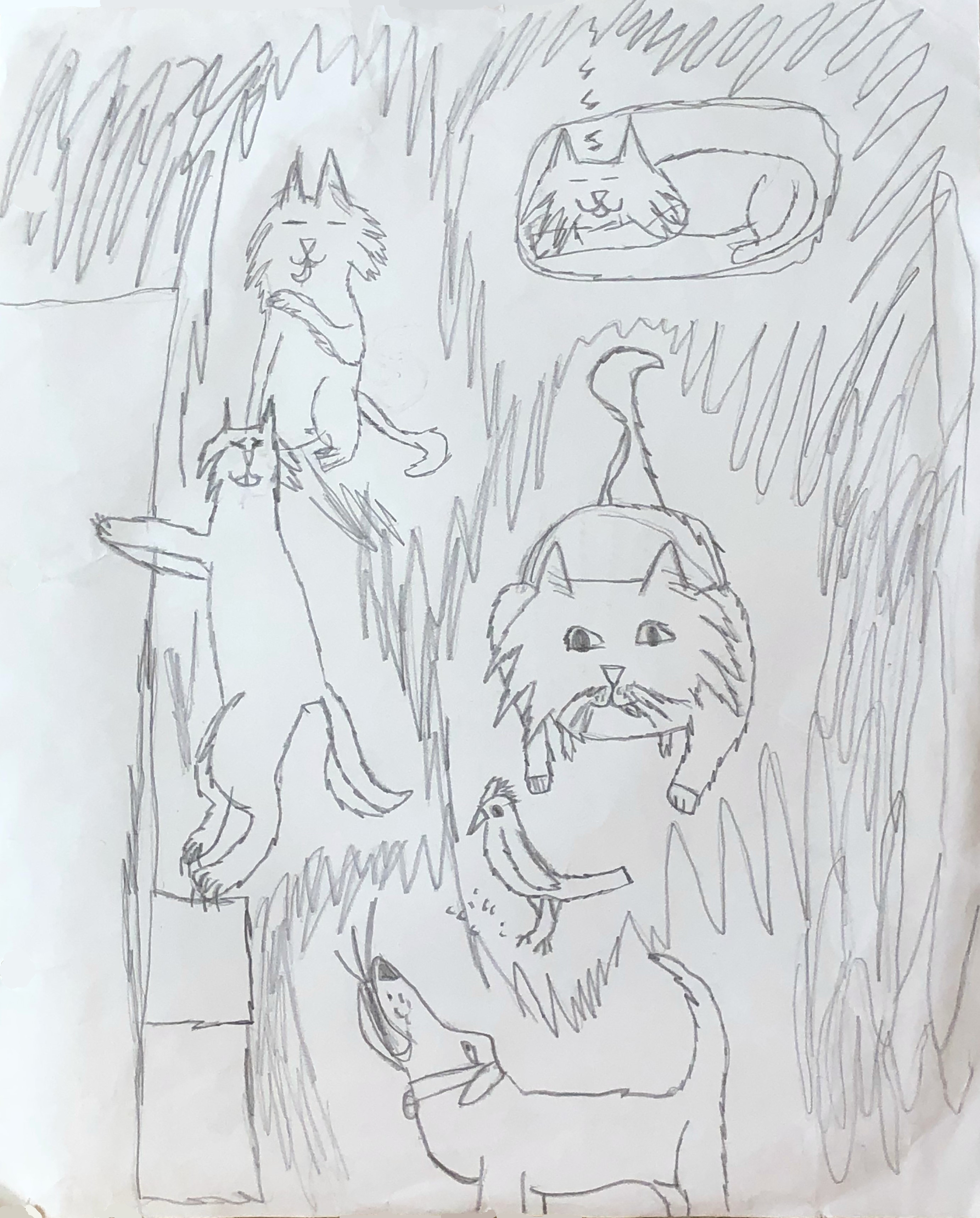
Ah, the life of a house cat! A simple yet elegant lifestyle fit for a fancy feline. Watch as cat grooms itself, takes a nice pleasant nap, goes on the hunt and finally...gets chased by a dog...yeah not necessarily on the scheduled but it happens.
Every artist has that one piece in their portfolio that, despite being "somewhat badly made" by their current standards, holds a massive amount of serious sentimental value. "Life of a Cat is exactly that for me. Dating back to the 2004-2006 era, this sketch is a relic from a time when I truly sucked. whoops! what I mean to say is I was just beginning to explore how to tell a story through a single image and draw it decently too.
While the technique might be raw, the "cute story" behind it remains clear. In the world of art, sometimes the message and the emotion behind a piece are more important than the technical perfection of the lines. This drawing captures a fleeting moment in the life of a feline protagonist, reminding us of the simple joys of early creativity. For this piece, I chose the most fundamental tools in an artist's kit: sketching paper and a graphite pencil. There is something incredibly honest about a pencil sketch. Without the distraction of color or digital effects, you are left with nothing but the "bones" of the composition.
1.Texture and Shading: Sketching paper usually has a slight "tooth" or texture to it. This allows the graphite to grip the page, making it easier to create those soft gradients you see in the cat's fur.
2.The Sketching Process: Back in the mid-2000s, I wasn't using fancy mechanical pencils. This was done with a standard 2B pencil you bring to school. The beauty of these tools is their versatility; you can achieve sharp, crisp outlines for the cat's whiskers or use the side of the lead for broader, softer shadows.
3.Preservation: Keeping pencil sketches from 2004 intact is a challenge! Graphite can smudge easily over time, so seeing this piece survive two decades is a testament to the durability of traditional sketching paper when kept in a physical gallery or portfolio.
Medium and Technique
The heart of this drawing is the narrative. As I noted in the original description, "that cat better be careful around dogs!" This piece taps into the age-old rivalry between cats and dogs-a theme that has been explored in art and animation for decades. In "Life of a Cat," the viewer is invited to imagine what happens just outside the frame. Is there a dog barking in the distance? Is the cat perched on a fence, calculating its next move? By leaving these details to the imagination, the sketch becomes an interactive experience for the viewer. It captures that classic feline instinct: the mixture of curiosity and extreme caution. Why We Love Drawing Cats Cats are a favorite subject for artists, from the ancient Egyptians to modern-day internet illustrators. Their bodies are incredibly fluid, making them a great study forgesture drawing. 1.Anatomy:Even in an "old and simple" sketch, trying to capture the curve of a cat's spine or the alert position of its ears is a great exercise in observation. 2.Personality: Cats have a way of looking both regal and ridiculous at the same time. Capturing that "funny" or "cute" energy was a primary goal of mine during the 2004-2006 period. Reflecting on the Journey Looking back at "Life of a Cat" allows me to see how far I've come. For any aspiring artist reading this, never be ashamed of your "old" or "badly made" work. These pieces are the stepping stones to your current skill level. This sketch isn't just about a cat; it's about the process of learning. It's about the 2004 version of myself sitting down with a piece of paper, a pencil, and an idea, and having the courage to put that idea into the world.
Final Thoughts Though "Life of a Cat" is a simple sketch, it represents a pivotal moment in my artistic timeline; especially with pencil. It's a reminder to stay curious, to keep sketching, and-most importantly-to always keep an eye out for dogs!
Date: 2004-2006?
Medium: Sketching paper W pencil
(Note: This piece belongs to my oldest archive. Integrating these work with [OLD] on the back into my digital gallery allows me to bridge the gap between my childhood inspirations and my modern professional standards, providing a complete timeline of my artistic evolution.)